Is Ice Skating Hard for Beginners? Honest Truth + Quick Start Tips
Did you visit an ice rink with your friends and failed miserably to stand on your two feet? Are you considering learning ice skating and are worried it would be too hard? Are you trying to get an honest estimate of how difficult and time taking learning to ice skate is? Well, you have found your way to the right resource. This post will answer all those questions for you. But before, I dive into the details, here is a quick answer to one of the most frequently asked questions: ‘is ice skating hard for beginners’-
Ice skating is not hard for beginners who have prior experience in a balance sport like inline skating. However, for beginners with no experience in balancing, ice skating can be tough only till they develop balance. After comfortably learning to balance on the thin blades of an ice skate, ice skating can feel exciting and positively challenging.
In this post, I am going to divulge all the factors associated with ice skating for beginners including how much time it takes for beginners to feel comfortable ice skating as well as things to do to speed up the process.

How hard is ice skating for beginners?
As stated earlier, ice skating can feel challenging till you learn to balance on skates. But how long does it take to learn balancing on ice skates? Honestly, the time period varies from person to person.
Some people manage to learn basic balancing in a week while some take a few months.
There are a number of factors that directly impact this length of time:
Skating experience
In my opinion, of all the factors that determine how long it takes to learn balancing on ice skates, the one with the most impact is previous skating experience.
If you have learnt any form of skating in the past – roller skating, skate boarding, street skating, etc. you will find yourself being able to balance on ice skates in a few hours.
But those who start of directly on an ice skate can take much longer. This is because ice skates quite thin and sharp.
Thus not only is balancing incredibly difficult but getting up after a fall without touching the ice (to prevent risk of someone running over your hands with a sharp skate) even more difficult.
But this doesn’t mean that you should first learn a simpler form of skating and then move towards ice skating. You can directly start with ice skating. All that you would need is a bit more patience and commitment.
You can read a detailed post on how to balance on ice skates here.
Level of determination
There is no silver lining to falling repeatedly on ice and then struggling to get up on your legs alone. After a few falls, you either feel like giving up on ice skating altogether or you feel like holding on to the rail for as long as possible and never really trying to balance on your legs.
It is in these moments that you need to summon all the determination within you and push yourself to make mistakes, fall a few times but not give up.
Often a person’s level of determination makes the biggest difference in terms of how long it takes to move beyond the beginner phase of ice skating.
That’s also why some people feel that kids learn faster than adults and the only real difference between kids and adults is that kids do not worry about failing or falling.
So if you want ice skating to feel easy, embrace failure. Do not give up and keep trying again and again till you no longer wobble when standing on your skates.
Guidance
If you learn under someone’s guidance versus learning on your own, ice skating will feel a lot easier. You will have someone supervise your technique and correct you immediately. You will know exactly how to position your legs, how much to bend in your knees, how to get up after a fall, how to tie your skates properly, how and when to let go off the rail without you having to figure it out all on your own.
Doing this will mean falling on ice a lot lesser than you would if you try out ice skating all on your own.
Frequency and duration of practice
Ice skating can feel tough as a beginner and the only way in which you can move past the initial tough and trying phase is by practising more often. Initially, showing up as often as you can at the rink can make a world of a difference.
Ideally, you should practice for a couple of hours at least two times a week. If the gaps between two sessions are longer, your body won’t remember the mistakes you make in the previous sessions and you will waste a lot of time relearning skills from your previous session.
Closer sessions allow better muscle adaptability and shows quicker progress. Thus, even if your body is too sore from all the falls of your last session, don’t skip your next session. Get up and get skating!
Things to do before taking up ice skating to progress faster
Even though the amount of time taken to learn the basics of ice skating varies between person to person, there are actionable steps you could take even before you hit the rink to already guarantee faster progress.
Casual skating

Heading out to a rink with friends even when you are absolutely unsure about taking up ice skating seriously helps. It will give you a feel of skates and the rink. You will know exactly how frightening standing on a pair of blades can feel.
Thus, when you take up ice skating seriously, you will know exactly what to expect. You will feel less disappointed even if you make slower progress as your expectations would be far more realistic than someone who has never stepped on ice.
Contact a friend or coach
Even before you enroll yourself for skating lessons, speak with a friend or a family member who is good at it. If you don’t have someone in your immediate set of acquaintances, get in touch with a coach near you.

Getting in touch with a friend or a coach and having a one-on-one conversation with that person can be very encouraging. Instead of just watching videos and reading articles about ice skating, an actual conversation where you get all your doubts cleared and questions answered can feel like a relief.
You will approach your first proper session at the rink with more confidence. More confidence, more clarity and fewer nerves means better balance and that’s ultimately what you’re aiming for, isn’t it?
Mentally prepare to fall and fail
I have addressed this in one of the paragraphs above but I am now going to spell it out for you here. You can’t learn any form of skating till you mentally prepare yourself to fall and fail.
You have to completely let go of these fears.
The more you hold on to your fears, the less likely are you to let go of the railing and start skating.
So, I suggest that you go with the flow. Don’t beat yourself up for not making any progress the first few times you step on ice.
Get the right gear
No matter how mentally prepared you are, you will have a hard time skating if you don’t equip yourself with the right gear.
So start researching the best ice skates for beginners, how to size your ice skates and what protective gear to buy.
At the very outset, you will need the following gear:
- skates (make sure you get the right size)
- socks
- winter sports clothing: snow pants/jacket
Kids starting to skate should also be equipped with:
- Helmet
- Gloves
- Elbow pads
- Knee pads
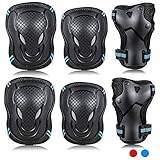


Most skating classes require beginners to start with figure skates. But, that shouldn’t be the norm. If you want to take up ice hockey or find yourself more interested in ice hockey, you can directly start with hockey skates.
Rope in a friend/family member/partner (optional)
Try and rope in a friend or a family member or a partner to start taking lessons along with you. Having someone you know with whom you can share your initial skating woes can feel very reassuring. Your chances of giving up on skating also drop when you have a companion learning with you.
You can use your companion to practice off ice, to work as an accountability partner or to simply make your journey to and from the rink less boring.
So if you are considering taking up ice skating, start checking if anyone in your close circle is interested in tagging along with you.
But this step unlike other steps is completely optional.
Beginner tips: Things to do to make quicker ice skating progress
Now that you have prepared yourself to start ice skating, it is time to take steps that will help you move beyond the beginner phase sooner.
Go skating as often as possible
As I have stated above, the lesser the gaps between your initial sessions, the faster you’ll see progress. -Try and visit the rink as often as you can. Even if you can’t go everyday, go at least twice a week.
Similarly, extend your skate sessions to at least one hour every time you go skating.
Remember, the first few sessions could feel, difficult, physically draining out and mentally exhausting – but the more you skate, the better you’ll get at it!
Enrol for classes
If you think skating is hard for beginners, you should know that it is way harder for beginners without proper guidance.
Honestly, the quickest way to learn skating is by learning it from someone experienced or by taking training.
Check for the best skating classes near you and enrol.
All skating classes have a systematic curriculum that adopts a methodical approach to teaching beginners. The curriculum is broken down in various levels and formal evaluation takes place at the end of every level.
This approach to learning skating makes skating feel far less difficult as you receive proper guidance for every step along the way.
But if you are not sure if you should invest in a skating class right away, you can read our complete post on can you learn ice skating on your own here.
Practice off ice
I can’t stress enough on the importance of practising off ice – particularly in the initial ice skating days.
Off ice practice can include any of the following exercises:
- Learning to walk with ice skates on (on the foam area next to the rink)
- Performing workout routines aimed at improving stamina, balance, grace, focus, etc.
- Cross-training using roller blades (consult someone before doing this as it could negatively impact your technique)
Honestly, the off ice practice that you should focus on the most is a fitness routine. You need strong legs, a sturdy core and excellent stamina to get the most out of your ice skating sessions.
Read a detailed post on how to practice ice skating without ice here for more insights.
Watch videos
Before you start ice skating, watch plenty of beginner videos. If you are trying to learn ice skating all by yourself, tutorial videos would be your biggest support system.
But even if you are taking classes, you would benefit a lot from beginner videos like
- how to step on ice the first time as a beginner,
- how to learn to balance on ice,
- ice skating tips for beginners,
- the right technique of falling when ice skating, etc.
You don’t have to be all laced up when watching these videos. You can sit on your couch and simply take in all the information that these videos provide. You will subconsciously apply techniques taught in these videos when you step on the rink and expedite your learning process.
Stay determined/Don’t give up
I am going to gently remind you one final time to not give up! Ice skating is one of the best solo sports that people, no matter their age, can begin to learn.
While every stage of your ice skating journey is going to present you with unique challenges, the beginner stage will feel particularly tough and mentally demanding. But don’t give up.
Your initial determination and commitment will reward you immensely in the years to come. Skating will no longer feel agonising and in a matter of a few months, you will find yourself comfortably moving around, flipping and performing hard sequences on ice.
What to do if you feel like giving up ice skating?
Well, if even after employing all the tips and suggestions listed above, you just can’t get the thought of quitting ice skating out of your head, here are a few ideas for you.
Find motivation through examples online
There are many ice skating forums online where people discuss all their ice skating problems and get suggestions and feedback from fellow ice skaters. The online community of ice skaters is quite large and supportive of each other.
You can reach out to them for motivation or simply scroll through various inspiring forum threads and stay motivated.
Try roller blading
Finally, if ice skating just doesn’t click for you, you can consider a slightly easier form of skating – roller blading. Many people find balancing on roller blades easier than ice skates because of the wider wheel base. Plus, you can also practice roller blades on dry surfaces and don’t have to be dependent on the availability of a rink.
Once you master roller blade balance, you can always reconsider going back to ice skating.
Conclusion
To cut a long story short – ice skating is tough for beginners till they learn to balance. But it’s not hard. You can acquire a command over it by practising, learning from the right people and by staying determined.
Hope you found this helpful! Good luck!