Practice Ice Skating Without Ice: Tips, Hacks, and Drills
When we start learning a new skill, one as exhilarating as ice skating, we want to do everything possible to get better at it. That zeal often leads us to ask a question like how to practice ice skating without ice.
Even though the question seems unreasonable or bizarre at first, on a deeper thought, it shows a committed resolve towards learning.
Practicing ice skating without ice involves working on three key aspects:
- working on fitness for better ice skating performance
- practicing moves like gliding, stopping and falling on an off-ice setting using the right technique and equipment
- learning a similar skating discipline like roller blading for off-ice training
The above techniques of practicing ice skating without ice can be applied to all forms of ice skating- figure skating, ice hockey, or speed skating with a few discipline-specific variations. Continue reading the detailed post to understand the ways in which you can maximize your time off-ice to get the best out of your on-ice sessions.
How to practice ice skating without ice?
Fitness Exercises
Why is off-ice fitness training important for ice skating?
Fitness is crucial for improving at skating. The key aspects to work on are
- core strength for better balance
- leg strength for improved movement
- stamina for sustained performance
- flexibility for better maneuverability
How to perform an off-ice fitness routine for ice skating?
There are two key approaches to off-ice fitness routines:
- Performing a full-body routine that addresses all aspects of fitness
- Performing a goal-oriented routine to improve a specific aspect
What are the key components of a full-body off-ice skating fitness routine?
There is no standard off-ice fitness routine that you can stick to for years together. You will have to design one to meet the demands of skating.
Here is a guide to help you build your workout routine
Warm-up
Warm-up is critical before any workout. Stick to the basics. Just loosen up your joints and warm up your body.
Suggested quick warm-up routine
- Neck and shoulder rotations
- Arm stretch repetitions
- Waist twists
- Hip rotations
- Knee rotations
- Squats
- Lunges
- Toe touch repetitions
- Full leg stretch repetitions
- Sitting V leg arm stretch repetitions
- Sitting butterfly legs
- Sitting straight leg: toe touch repetitions
- Spot jogging
- Jumps
- Twist jumps
Core exercises
Ice skating is all about balance and staying upright on a thin blade requires you extreme core strength. A good strength can expedite your progress in ice skating.
The following exercises help improve core strength
- Planks
- Side planks
- Crunches
- V sit-ups and hold
- Bridge
- Single leg bridge
- tummy tuck jumps
Leg strength
Skating is essentially all about balancing your whole body on one leg. The number of times you will find yourself holding your entire body on the inside of your mid-foot region will amaze you.
But for your leg to carry your weight through the dynamic and fast movements of skating you will need to prepare it in your off-ice training routine.
Some exercises to help you are:
- one leg balance
- one leg jumps
- squats
- donkey kicks
- mountain climbers
- leg lifts
Stamina
You can’t sustain your on-ice performance if you lack stamina. To take your hobby to the next level or even to transition from an intermediate level to a pro-level, you need to build great stamina. The best way to build stamina is by including cardio-intense routines in your workout.
Some cardio moves are
- spot jogging
- floor sprints
- jumping jacks
- High knee jogging
- rapid mountain climbers
- burpees
- skipping
Stretching
Stretching improves flexibility. Improved flexibility is particularly helpful in figure skating as you can add a wide variety of spins and tricks to your skating repertoire. But skaters engaged in other disciplines can benefit to a great extent with flexibility. Flexibility helps you balance better and also keeps you injury-free. Some exercises to help you build your flexibility are
- Splits
- Deep lunges
- Hip flexor stretch
- Cross body arm stretch
- Various yoga postures
Make sure your technique is flawless when you stretch to avoid unwanted physical damage and injuries. Stay in every stretch for as long as possible. Breathe normally throughout.
Meditation
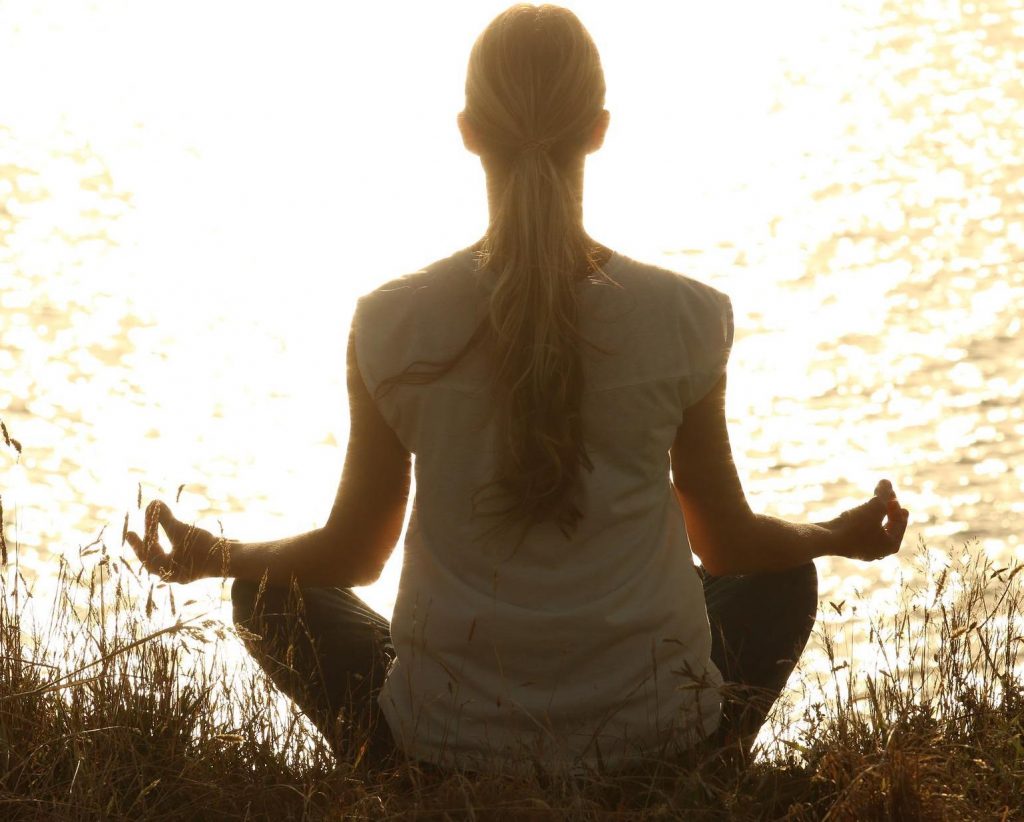
Meditation is the most overlooked or the least recommended part of an off-ice fitness routine. But when included, it can show remarkable results.
Meditating can be done in various ways:
- Breath awareness
- Setting an intention and meditating
- Visualisation exercises
- Aum chanting
Meditation will help you calm down, gain clarity, and practice skating in a far more intentional way. The positive effects of meditation are rarely limited to just one area of life and ending any workout with a short meditation session can be immensely beneficial.
Practicing Moves
It is impossible to get the exact feel of skating on ice in an off-ice skating. But there are a few moves that you can practice even at home.
Glide
Gliding is one of the most important movements in ice skating. Getting the technique of your glide right can have far-reaching effects on your overall skating performance.
To practice gliding at home, wear shoes on one foot and socks on the other. Stand in a tee position, push yourself on the front foot, stretch your arms out and get gliding.
The video below is an excellent demonstration of practicing gliding at home.
To improve your gliding practice, you can even use a slide board.
Slide boards are one of the most used training equipment of skaters, particularly speed skaters. You need to wear special footwear for it but it gives you a true feel of gliding and can be used to improve your posture and technique from the comfort of your home.
Click here to check out this slider board on Amazon
Spins
Figure skaters need to get their spins right. The best way of getting spins right is by using an off-ice spinner.
The spinner locks your body and helps you focus on getting your upper body spin technique right.


Click here to check out this spinner on Amazon
But you’ve to be careful when using the spinner to avoid injuries and falls.
This video is excellent for learning to how to use an off-ice spinner as a beginner
Sideways Fall
The importance of a sideways fall in skating is so understated. If you have to learn one move before you ever skate, it has to be the sideways fall.
It’s the safest and the easiest way of falling on an ice rink.
Practicing a sideways fall, at home, without skates can help you boost your confidence on the ice. It is a skill all skaters must master irrespective of their proficiency level.
Stickhandling Drills
Stickhandling drills are specific to ice hockey but practicing them at home can be an absolute game-changer.
You can follow the stickhandling directions in the video given below. It is one of the most comprehensive drills that you can find on the internet.
Roller skating
Skating in any form improves your balancing technique. You are forced to regulate your body weight distribution.
Thus, even though the basic structure of roller blades and ice skates is completely different, learning a skating form like rollerblading that can be practiced on most outdoor surfaces, can be a huge boon. All the practice that you put in on rollerblades will help you progress at ice skating faster.
Yes, the feel of the blade and those of roller skates are completely different. Ice skating mainly requires you to push through ice. But the basic technique of push and glide is similar. The gliding posture is also quite similar. Roller skates without a brake block can also be stopped using the ice skate t-stop technique.
Rollerblading is a particularly helpful off-season drill for speed skaters. Figure dancers can also borrow from their learnings of roller derby.
Frequently Asked Questions
Can you ice skate on carpet?
Ice skating on the carpet is not possible. But as a fun indoor activity, you can spread the wax paper on the carpet, wear socks and replicate the gliding and skating movements on the carpet. It could help keep the skating muscles engaged during off-season.
Is it possible to learn ice skating at home?
Learning ice skating at home is not possible. But there are drills that can be performed at home that can help improve ice-skating technique. These drills involve doing mock gliding, sideways fall and spins. You may need to use a slide board or a skate spinner to perform these drills.
Can you practice ice skating with rollerblades?
Technically, you can’t practice ice skating using roller blades. But learning rollerblades can help you make faster progress at ice skating. Learning to balance, push and glide, and perform a t-stop are techniques that can be used in both roller skating and ice skating and hence practicing rollerblading can expedite ice skating progress.
Summing Up
When there is a will, there is a way. And that’s exactly what I wished to demonstrate in this detailed article. Just because ice skating is to be performed on an ice rink, doesn’t mean you can’t work on it off-ice. Use the above techniques and drills to make faster ice skating progress.