Can You Learn Ice Skating By Yourself? Challenges + Tips
Are you wondering if you should sign up for ice skating classes or learn to ice skate on your own? Are you unsure about the best time to join classes? Are you worried about making a fool of yourself in front of others at ice skating classes? Or do you feel embarrassed to attend classes with kids and would prefer to learn ice skating on your own?
Basically, are you wondering if you can learn to ice skate by yourself? If yes, let me clear your doubt right away.
You can easily learn the basics of ice skating on your own. However, learning advanced skills of ice skating on your own would be challenging without proper guidance. Moreover, learning to ice skate yourself would slow down your overall progress and also put you at risk of developing incorrect skating posture and technique.

But this doesn’t mean that you need to sign up for a class right away. Read the detailed post below to find out if you should learn to ice skate on your own. Go through the tips to help you learn skating on your own and also find out when the right time is and what the right reasons are to join a class.
Can you learn ice skating by yourself?
So let’s break it down – can you learn ice skating on your own? If yes, what exactly can you learn on your own, and how much time would it take to learn on your own.
What ice skating skills can you learn on your own?
You can learn ice skating basics on your own. By basics, I mean you can learn
- To stand upright on the skates on your own
- To move forward and backward
- Stopping/Slowing down
- Falling intentionally
- A few basic tricks
How quickly can you learn to ice skate by learning yourself?
The speed of learning depends on past skating experience, inherent talent, frequency of practice, and determination. But you can develop basic balancing skills in a couple of days to a week if you practice regularly.
You can also learn to move forward and backward in a couple of more weeks, provided you stay consistent with your practice.
Learning to stop or slow down would require a bit more time and practice than learning to skate. That’s why I recommend you to learn to intentionally fall on ice and get up before you learn any other skill.
But remember that learning on your own takes much longer than learning from a coach or a class.
Plus, the biggest disadvantage of learning a skill like skating on your own is that you can develop technical errors.
The way you stand, the way you bend your knees, how you place your weight, etc., form the basics of ice skating technique, and any flaw that you develop early on is difficult to get corrected later. Plus, you won’t even know if your posture and technique is right if you don’t have an expert or a coach to observe you.
You’ll have to keep comparing yourself with the online tutorials you watch, with pro skaters that you see on the rink, and correct yourself.
Thus, learning to skate on your own is possible, but it would feel like an upward slope. It also comes with the risk of developing technical errors, making slow progress, and feeling lost and helpless sometimes.
Should you learn ice skating on your own, or should you join an ice skating class?
Okay, so now that you know the limitations of learning to ice skate on your own, it is probably a good idea to decide if you should join a class or stick to learning by yourself.
There are a number of factors that will help you decide this for yourself.
Level of interest in ice skating
This is the primary deciding factor. If you don’t really like ice skating and only want to learn it for social skating and recreational purposes, you don’t need to invest in a group class and definitely not in a private class.
But if you love skating and are serious about pursuing it regularly, the faster you enrol for classes, the faster you will start making progress.
Previous skating experience
If you have any skating experience, you will find learning the basics of ice skating fairly simple. Thus, if you know how to roller skate or speed skate, learning how to ice skate would be much easier than someone who is absolutely new to ice skating.
So if your primary goal is to only learn the basics of ice skating, you can easily teach that to yourself.
Fear of looking stupid
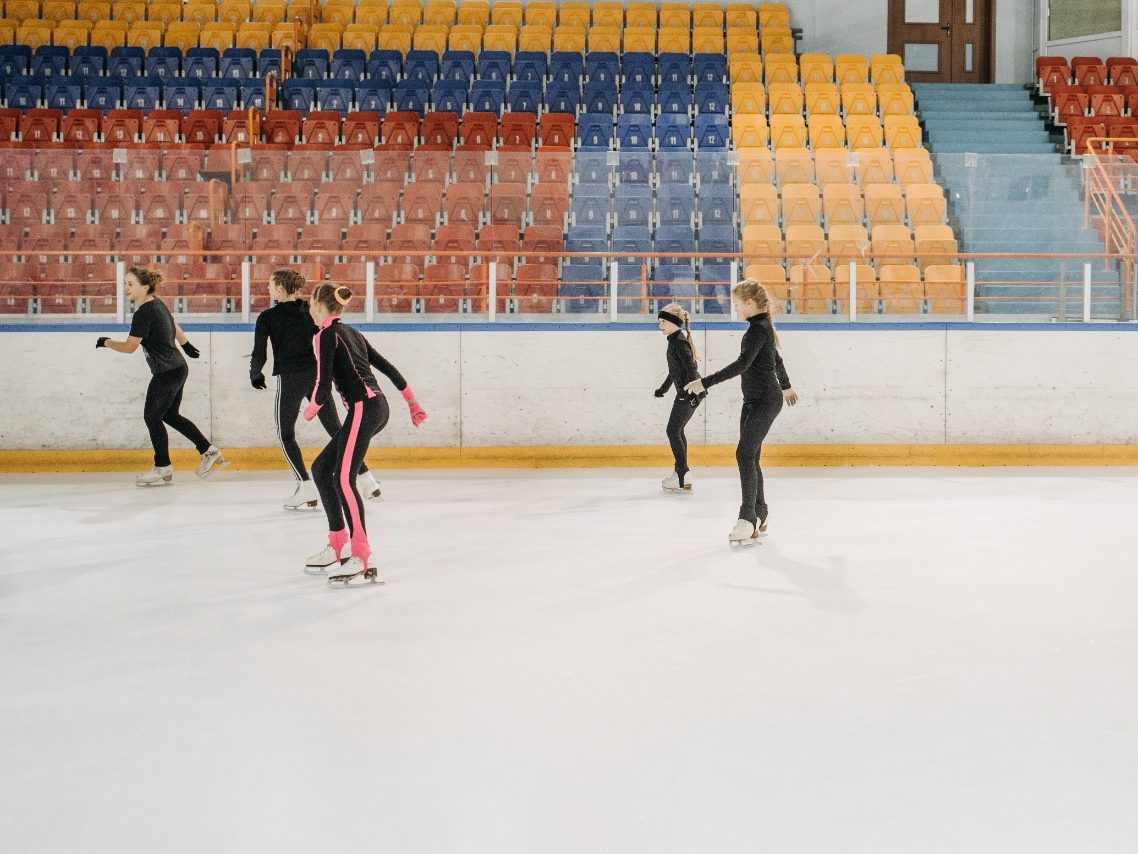
So many people don’t join ice skating classes because they are worried that they will look stupid in front when they fall in front of their fellow classmates.
This fear is particularly prevalent amongst adults who learn with kids.
Many people are also worried about not keeping up with their peers at class and falling behind. People also tend to feel embarrassed about not following their coach’s instructions. This fear often holds people back from joining a class.
So if you are worried of making a fool of yourself in front of others and especially kids who are much younger, you can opt to learn the basics by yourself.
Cost of group ice skating class
The cost of classes is often a discouraging factor for many who want to start skating.
So if you are on a tight budget, you can definitely eliminate coaching classes by learning on your own. But if you can manage to spare a few bucks per month for skating classes, you will be happy to learn that there are multiple skating academies that offer extremely affordable group classes.
On an average a 8 week 30 minute class costs USD 100 to 130.
But
- many kids classes allow an adult to learn for free.
- many classes also provide free skates on rent to its students thus saving gear costs.
- many classes also give complimentary public skating passes to students on class days which also saves money you would otherwise spend on paying for rink access.
Thus, the fee you pay for a group class can at times cut down other costs which means that the difference between the cost of learning on your own and learning at a group class is often not too substantial.
But if you are unable to find a group class that gives you the above benefits or if the group class near you is far more expensive, then it may be advisable for you to learn ice skating on your own.
Knowledge about ice skating gear
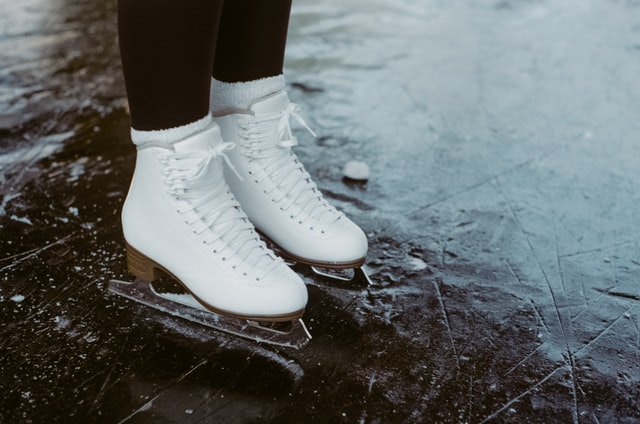
If you are a beginner, the chances are that you won’t know much about types of ice skates, sizing ice skates, choosing the right socks, helmet, and other protective gear.
But learning from someone ensures that you buy skates that are the perfect size or choose socks that are the right thickness (basically avoid thick socks – opt for thin ones), or get the right kind of protective gear.
The guidance that you get in this regard is crucial as wearing gear that doesn’t fit well or doesn’t complement your level of learning exposes you to injury and the development of incorrect technique.
You may also end up buying the wrong gear, which further amounts to incurring avoidable costs.
But as I stated above, if your objective is only to get yourself to comfortably balance on skates and learn a few basic tricks, you can take guidance from people you know, watch a few videos, read articles and learn on your own.
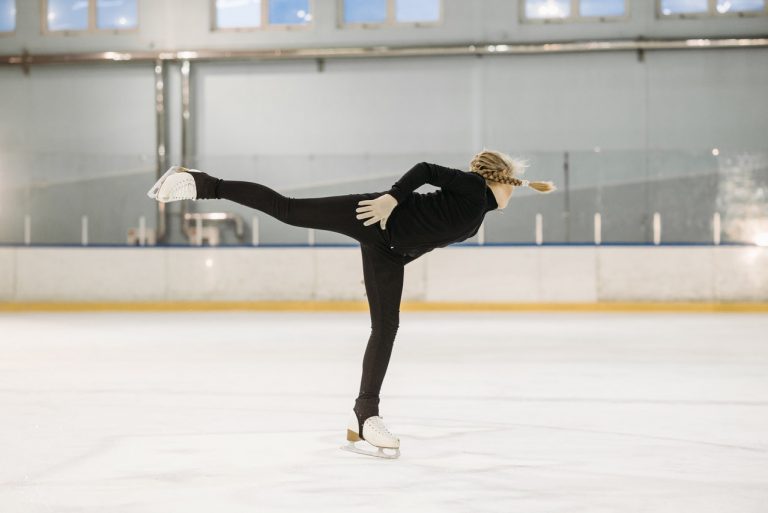
Learning complex ice skating moves
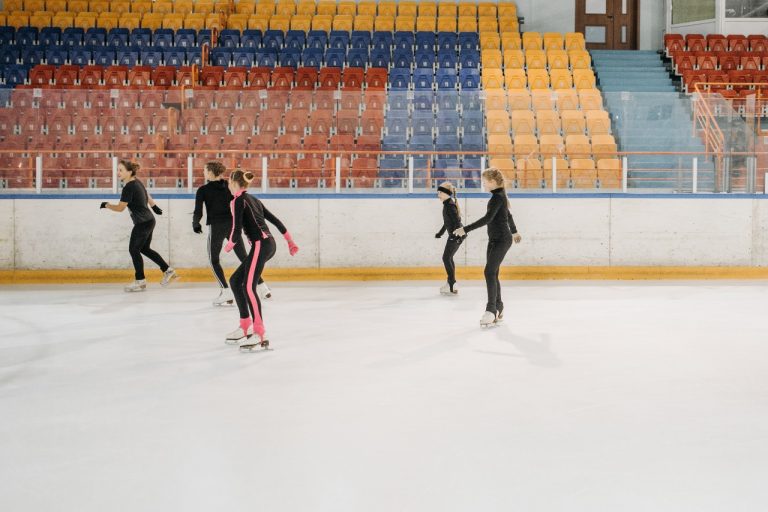
If you already know skating and want to advance to higher levels of learning, you will need a coach or classes.
Very often, people who learn the basics in a class think that since ice skating is all about individual practice, they can discontinue their skating class and start learning advanced techniques on their own.
But unfortunately, that’s not the right approach.
In my opinion, advanced techniques and complex moves require the guidance of a coach or an expert. They help you break down the move into small components.
Learning complex moves and tricks through a structured system under the guidance of an expert is essential to avoid serious injuries.
Once you get the move right, you can then practice the move on your own, and for the time you spend perfecting the move, you can opt-out of classes.
Participating in competitions
If you want to learn ice skating to participate in ice skating competitions, you absolutely need to enroll in classes. You cannot prepare for competitions on your own. Competition training requires structure, discipline, and commitment.
Competition-specific classes are structured to extract competition-level performance from their students. They follow a certain training and preparation routine that expedites the learning process and takes your skill level to a standard prescribed by the competition.
To perform to your fullest potential and to deliver at competitions, you need a coach. That’s one area where I strongly advocate against learning on your own.
How should you prepare yourself to learn ice skating on your own?
So now that you have gone through the list above, you would already know if you should learn to skate on your own or if you should join a class.
And if based on the above factors, you have decided to learn on your own, here are a few quick tips to help you get started.
Attire for ice skating

When you go ice skating:
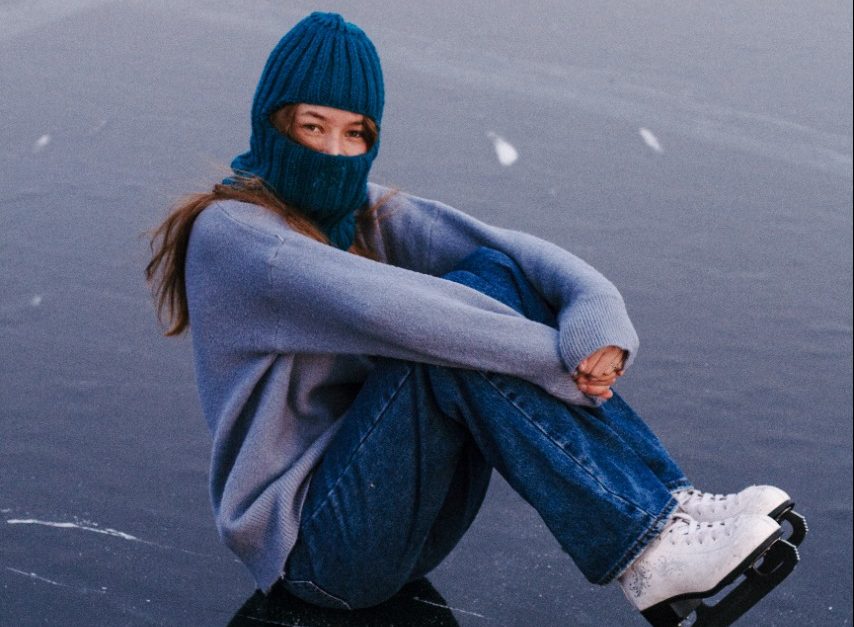
- Wear properly sized ice skates. Skates that are too tight will prevent free movement, and skates that are too big will make you fall due to insufficient ankle support. Avoid wearing a pair of jeans.
- Wear thin skating socks or leggings. Avoid cotton or wool as it is bulky and isn’t moisture-wicking
- Wear light clothes. Avoid bulky jackets. Stick to light, warm jackets that can be layered up or down. Wear stretchy pants that assist in free movement.
- Wear a helmet and gloves.
Pre-skating preparation
- Watch multiple ice skating videos before you decide to start learning on your own. Watch videos about ice skating basics as well as videos that teach you how to fall safely.
- Visit a public rink and observe skaters. Try to learn by observing.
- Read articles about ice skating gear and properly sizing ice skates.
- Decide if you want to rent gear or want to buy it. (I recommend buying gear once you are sure about pursuing ice skating regularly. But in any case, never wear skates that don’t fit properly or gear that’s not the right size.)
When and where to practice ice skating
- Visit a public ice skating rink. Avoid learning outdoors in snow, near a lake or a pond.
- Go at a relatively less crowded hour. You will get more space to learn. You won’t have to worry about what others think of you. Plus, you won’t risk being run over by a skate when you fall.
- Don’t go to a rink when its completely empty. You will need the assistance of fellow skaters to get up when you fall down or to guide you when you need help with something.
- All rinks require skaters to skate in one direction only. Stick to that direction when entering the rink and skating.
Basics of ice skating
Stand holding the rail :
- Enter the rink. Hold the rail and become comfortable with the feeling of standing on ice skates with ice under your feet.
- Keep your feet right under your shoulder – not too wide, not too narrow.
- The toes should be pointing forward. Inward pointing toes or outward pointing toes expose you to ankle injury risks.
- Bend your knees. Stay a bit higher than your regular sitting position.
- Make sure your weight is slightly on the front end of your foot. But not entirely on the toes. Avoid placing your weight on the toe pick at all costs.
Leave the rail:
- Once you are confident, leave the rail. But stay within an arm’s distance from the rail.
- Practice standing steady. Stretch your hands straight in front and lower them to your hip level. Stand as if you are pressing down your hands on an imaginary table for your support.
- If you fall, practice falling sideways. Get up without touching your hands down.
Moving/Gliding
- Start marching with your toes pointing outwards. Do not use lift your foot up. Push outside from the middle of your arches as you take small steps forward. Do not use your toes to propel yourself forward.
- To glide, gain some momentum marching and then place your legs directly under your shoulders to continue gliding forward.
Stopping
- To stop, push your legs wider away from your shoulders. Point your toes inwards or your heels outwards.
- Do not lean into your skates, as putting weight onto your skates will keep the momentum going.
- Keep your knees slightly bent.
Do not look down when skating. Always look right in front of you. This helps you stay balanced.
Closing Thoughts
To sum it up, know what your end goal is before you decide whether to learn ice skating on your own or join a class. In my opinion, there are limitations to learning to skate on your own, and taking up classes pays much better dividends, especially in the long run.